The Icelandic cryptocurrency, explained
What Is Auroracoin? Iceland's Cryptocurrency Explained
The short version of “what is Auroracoin”: a cryptocurrency (AUR) created for the people of Iceland and distributed through the first national airdrop in monetary history. Every Icelander could claim 31.8 AUR — a direct answer to years of capital controls on the Icelandic króna. This reference explains where the coin came from, how it works, and what became of the experiment.
Specimen · Digital currency
Cat. no. AUR-001
- Ticker
- AUR
- Launched
- 2014/02/02
- Codebase
- Litecoin (scrypt)
- Premine
- 10,500,000 AUR (50%)
- Airdrop share
- 31.8 AUR per citizen
- Eligible
- ~330,000 Icelanders
What Is Auroracoin, Exactly?
Auroracoin is a decentralized digital currency launched in early 2014 by a pseudonymous creator using the name Baldur Friggjar Óðinsson. Technically it began as a fork of Litecoin, using the scrypt proof-of-work algorithm, with one radical difference: half of all coins were set aside in advance for the Icelandic public. The premine was not a founder's reward. It was the fuel for a giveaway on a national scale.
The full answer to “what is Auroracoin” has two halves. It is a functioning cryptocurrency for Iceland, with its own blockchain, wallets and miners. And it is a political statement about money, made at a moment when the country's official currency could not move freely across its own borders.
A Cryptocurrency for Iceland, Born From Capital Controls
The project only makes sense against the backdrop of the Icelandic financial collapse of 2008. When the country's three major banks failed, the government imposed capital controls in Iceland to stop money fleeing the economy. The measures were announced as temporary. They were still in force more than five years later, when Auroracoin appeared.
Under the controls, Icelanders were required to hand foreign currency earnings to the Central Bank and could not freely invest abroad. Auroracoin was designed as a cryptocurrency for Iceland precisely because no bank or ministry could block its transactions. The creator's stated goal was to give every citizen a working alternative to the króna and let the market decide whether it deserved trust. The full argument is documented on the Icelandic currency history page, and the coin's founding text is preserved in the annotated Auroracoin blueprint.
How the Auroracoin System Works
Day to day, Auroracoin behaves like most proof-of-work coins of its generation. Transactions are recorded on a public blockchain, confirmed by miners, and stored in wallets controlled by private keys. The mining page explains the algorithm in detail, including the later switch from pure scrypt to a multi-algorithm design that let different kinds of hardware secure the network.
The distinctive machinery sat on top: a claim system tied to Iceland's national identity register. Because every resident has a public identity number (kennitala), the project could verify citizenship online and release each person's 31.8 AUR — the mechanism examined step by step on the airdrop page.
- 2008
Iceland's banking system collapses; capital controls lock the króna inside the country.
- 2014/02
Auroracoin launches and its market value briefly ranks among the largest cryptocurrencies.
- 2014/03
The national airdrop opens at midnight on March 25 — 31.8 AUR per Icelander.
- 2015–2016
Remaining premine coins are burned; the network moves to multi-algorithm mining.
- Since
The blockchain keeps running as a community project and a case study in monetary experiments.
Where Auroracoin Stands Today
The frenzy of the launch months is long gone, and so is most of the coin's early market value — the full arc is charted on the value history page. What remains is a working blockchain, a small community, and an outsized place in the history books: before central banks talked about digital currencies, a lone developer air-dropped one onto an entire nation. Comparable state and national projects are collected in the national cryptocurrencies overview.
That afterlife gives the subject its lasting value. Auroracoin compressed every question that still surrounds digital money — who issues it, who verifies identity, what "market cap" means when supply is locked, whether distribution can create adoption — into one small country and fourteen documented months. The exhibits below take those questions one at a time: each links to a full page, and together they read as a complete account of the experiment, from the wallets people actually used to the chronology that holds it all together.
The collection
01The National Airdrop
How 31.8 AUR reached every Icelander: kennitala verification, the three stages, and what the claim rate revealed.
View exhibit →
The Blueprint
The founding document, annotated: three four-month stages, the burn clause, and the promises that were kept.
View exhibit →
Mining Auroracoin
From Litecoin's scrypt to multi-algorithm security: how blocks are found and why the change was made.
View exhibit →
Value History
The launch mania, the peak, the long fade — the price story told in phases, with the chart that explains the legend.
View exhibit →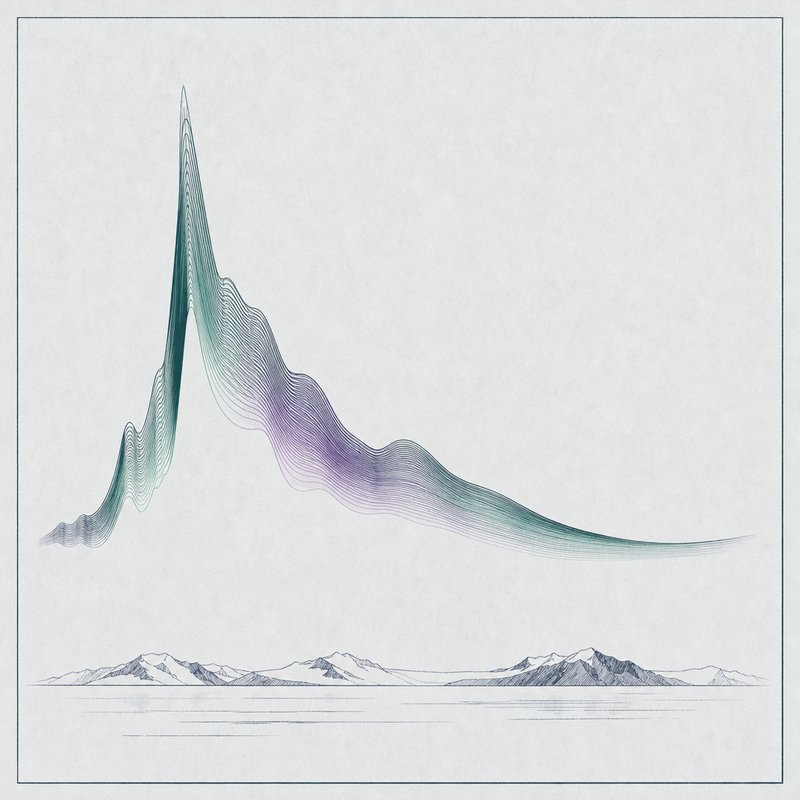
Iceland's Currency
The króna, the collapse and the capital controls: the monetary history that made a national cryptocurrency thinkable.
View exhibit →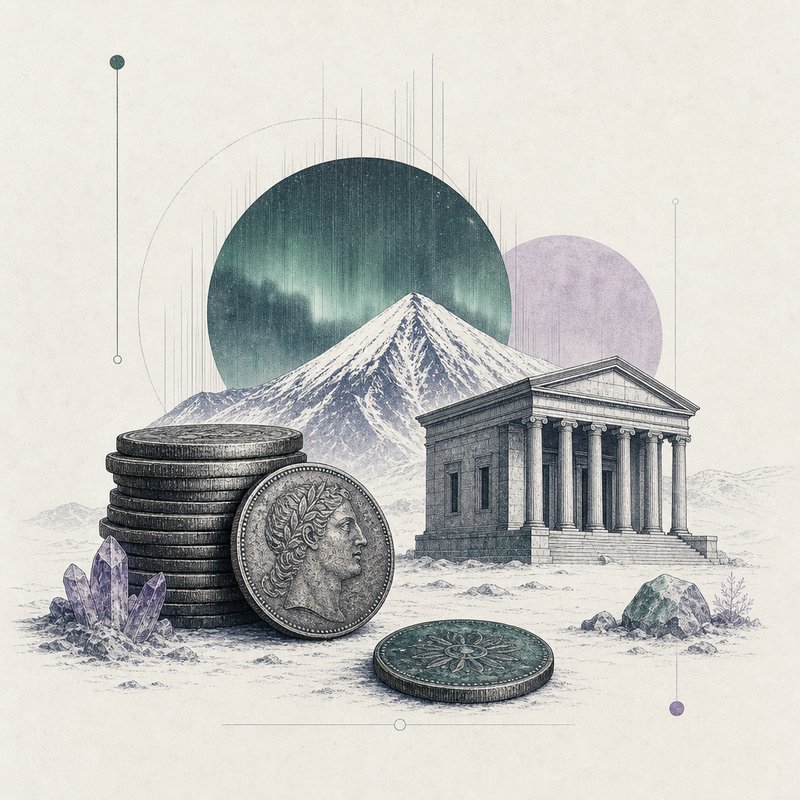
Timeline
Every milestone from the 2014 proclamation to the present, in one continuous chronology.
View exhibit →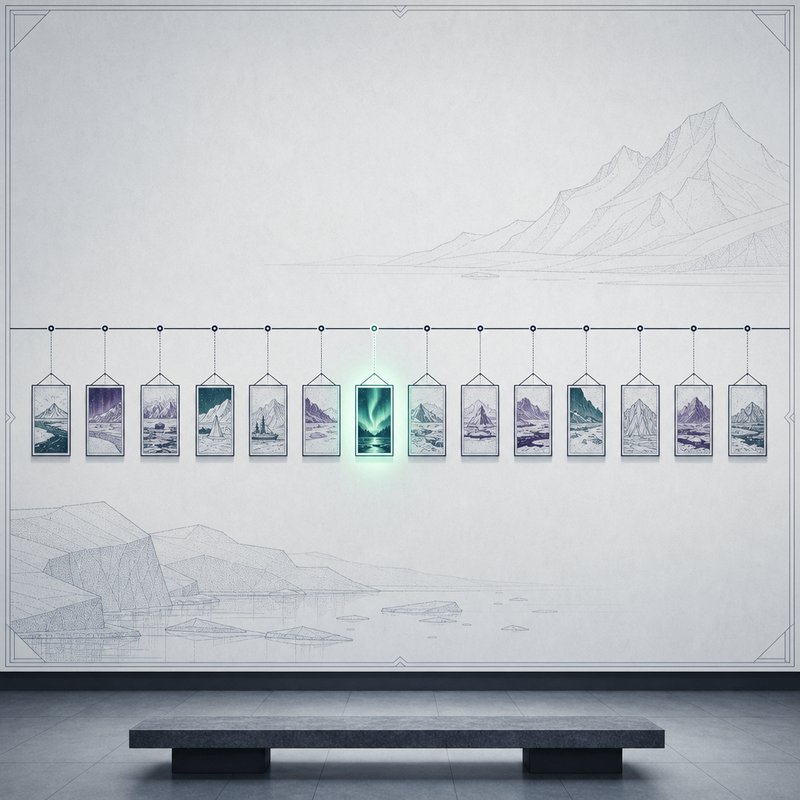
Frequently Asked Questions
What is Auroracoin in simple terms?
Auroracoin is a digital currency built for Iceland. It works like Bitcoin or Litecoin, but half of all coins were reserved for the Icelandic public and given away for free in a national airdrop that began in March 2014.
Is Auroracoin still active?
The blockchain remains operational and is maintained by a small community of developers and miners. Trading activity and market value are far below the levels of the launch period, which is typical for coins of its generation.
How many coins did each Icelander receive?
Each of the roughly 330,000 citizens listed in Iceland's national registry could claim 31.8 AUR in the first stage of the airdrop. Later stages redistributed unclaimed coins in smaller amounts.
What is Auroracoin based on technically?
The coin started as a Litecoin fork using the scrypt proof-of-work algorithm. The network later adopted multi-algorithm mining so that several types of hardware could secure the chain. Details are on the mining page.
Why was a cryptocurrency for Iceland created at all?
Because of the capital controls imposed after the 2008 banking collapse. The Icelandic króna could not be moved or exchanged freely, and Auroracoin offered citizens a currency no central authority could restrict.