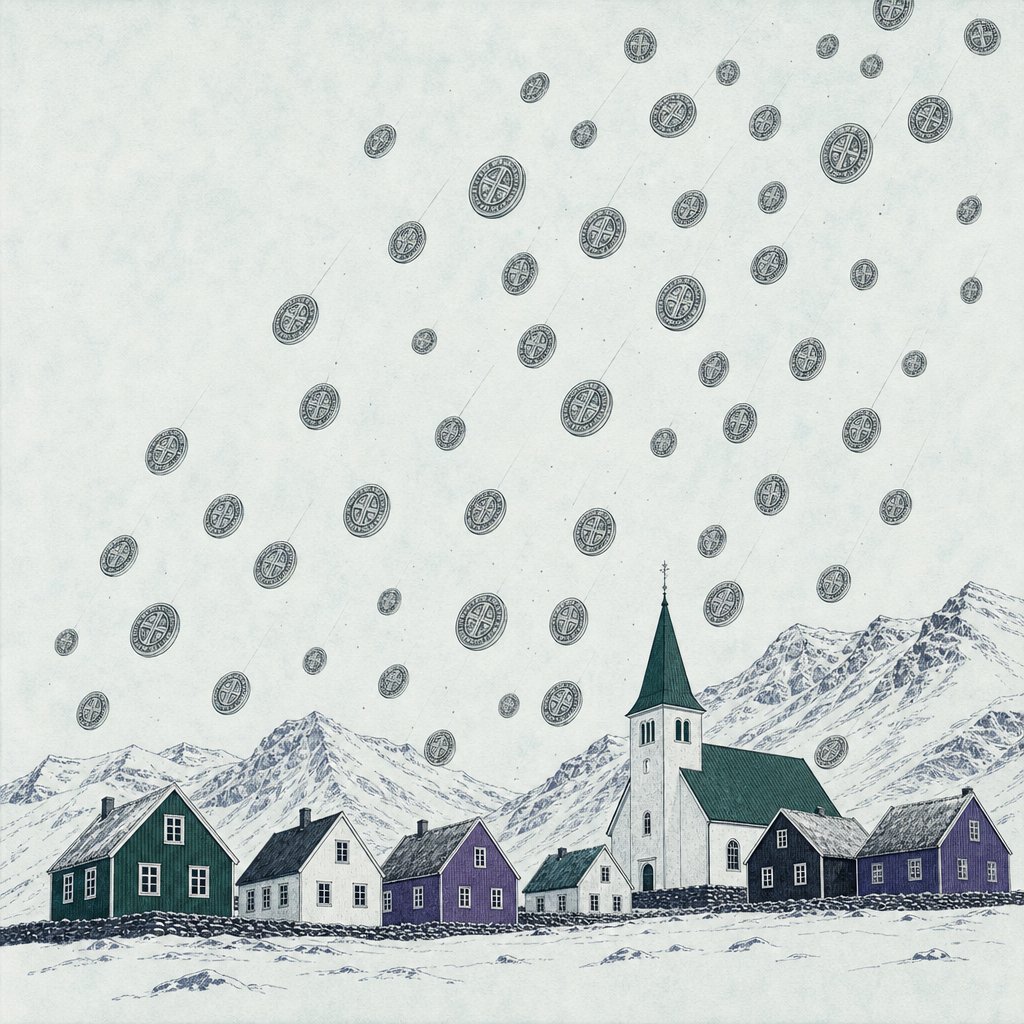
Exhibit 01 · Cat. no. AUR-002
Auroracoin Airdrop: How Iceland's National Giveaway Worked
On March 25, 2014, at midnight, every citizen of Iceland became eligible to claim 31.8 units of a brand-new digital currency. It was the first national cryptocurrency airdrop in history, covering an entire country at once, and it remains the reference case every later giveaway is measured against.
- Opened
- 2014/03/25 00:00
- Per citizen
- 31.8 AUR
- Eligible
- ~330,000
- Stages
- 3 × 4 months
A National Giveaway of 10.5 Million Coins
Half of Auroracoin's total supply — 10,500,000 AUR — was premined before launch and reserved for the public. Dividing that pool across the roughly 330,000 people in Iceland's national registry produced the famous figure of 31.8 AUR per person. The coins were presented as an unconditional gift. The Auroracoin airdrop asked for nothing in return: no purchase, no registration with an exchange, no strings attached.
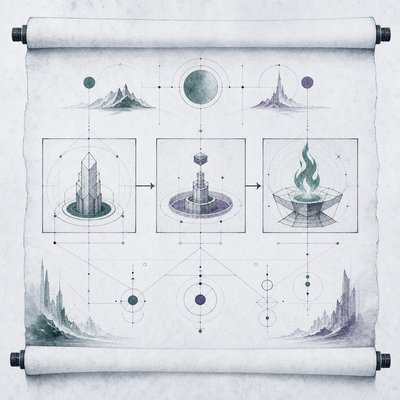
The scale is what made it remarkable. Earlier coins had experimented with faucets and small promotional giveaways. Nobody had attempted a national cryptocurrency airdrop covering every citizen of a country, from schoolchildren to pensioners. The pool's fate was governed by the published plan documented in the blueprint — including what would happen to coins nobody claimed.
How It Worked, Step by Step
Understanding how the Auroracoin airdrop worked starts with Iceland's identity infrastructure. The claim process had three moving parts:
- An Icelander visited the claim page and entered their kennitala — the national identification number that every resident holds and that is, unusually, public information in Iceland.
- The system verified the number against the national registry and checked it had not already been used. Verification codes were delivered through channels tied to the person's identity, such as SMS to a registered number.
- The claimant provided an Auroracoin wallet address, and 31.8 AUR moved from the premine addresses to their wallet as an irreversible transfer of ownership.
The elegance of the design was that the hard problem, proving citizenship online, had already been solved by the state itself. The project simply borrowed the registry that Iceland's 96% internet penetration made usable. That, in outline, is how the Auroracoin airdrop worked: three steps, one registry, no intermediaries.
How Iceland Responded: Stages and Claim Rates
The giveaway ran in three stages of four months each, laid out in advance. Stage one offered the full 31.8 AUR per person. Stage two reset the clock and redistributed whatever remained, dividing the leftover pool by 330,000 again — anyone could return, including people who had claimed earlier. Stage three repeated the reset once more, and any excess beyond a small reserve was to be verifiably destroyed.
| Stage | Window | Entitlement | Rule |
|---|---|---|---|
| Stage 1 | 2014/03/25 → +4 months | 31.8 AUR per person | one claim per kennitala |
| Stage 2 | +4 → +8 months | stage-1 remainder ÷ 330,000 | everyone eligible again, incl. earlier claimants |
| Stage 3 | +8 → +12 months | stage-2 remainder ÷ 330,000 | final window; excess burned afterwards |
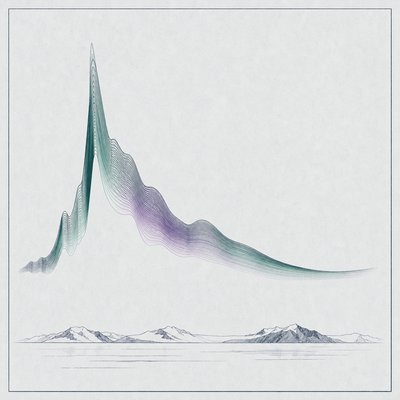
Uptake was real but far from universal. Media reports at the time put early claims in the tens of thousands, and the stage records show how it worked in practice: claims spiked in the opening weeks, then flattened. The pattern taught later projects a durable lesson. Distribution alone does not create usage. Many recipients cashed out quickly, and the sell pressure is visible in the coin's value history.
The Criticism It Drew
Contemporary coverage was not all admiration, and the objections aged well enough to be worth recording. Economists pointed out that a currency nobody prices goods in is a lottery ticket, not money, and that handing one to every citizen mostly created a nation of instant sellers. Security researchers noted the tension at the heart of the design: a decentralized currency distributed through one centralized claim website, which had to be trusted with matching identity numbers to payouts. And within Iceland, commentators asked the sharpest question of all — who was the anonymous donor, and what did they stand to gain from the half of the supply that stayed in circulation?
None of these critiques stopped the program, but all three shaped its reception. The claim site held; no identity scandal materialized; the creator never surfaced. What remained contested was the economics, and the market settled that argument in the direction the skeptics predicted.
What the Auroracoin Airdrop Achieved
Judged as monetary revolution, the airdrop fell short: the króna survived, and daily commerce in Auroracoin never took hold. Judged as an experiment, it succeeded loudly. It proved a national cryptocurrency airdrop was technically feasible, it left a public record of how it worked at every stage, and it pushed the question of monetary alternatives into Iceland's parliament and press. Every airdrop a crypto user has claimed since traces its ancestry to this one, executed against the backdrop of capital controls most people had stopped questioning.
More from the collection
 The Blueprint
 Value History
 National Cryptocurrencies
Frequently Asked Questions
When did the Auroracoin airdrop take place?
Stage one opened at midnight on March 25, 2014. Two further stages followed at four-month intervals, so the full program ran into 2015.
How was each Icelander identified?
Through the kennitala, Iceland's national identity number, checked against the public registry. Each number could claim exactly once per stage.
What happened to unclaimed coins?
Leftover coins rolled into the later stages, and the blueprint committed the project to verifiably destroying most of what remained after stage three. The burn of the residual premine was carried out after the program ended.
Was the airdrop legal?
No law prevented giving away a digital token, and the coins were an unconditional gift. Icelandic authorities discussed the phenomenon publicly, and the episode fed into later debates about how crypto assets should be taxed and regulated.
Did other countries copy the model?
Several projects borrowed the idea of identity-based national distribution. The national cryptocurrencies overview compares the notable attempts and how far each one got.