Reference · Cat. no. AUR-009
Auroracoin Resources: Code, Wallets, Explorers & Materials
This page collects the working pieces of the Auroracoin ecosystem: where the code is developed, how to run a wallet, and how to inspect the chain directly. Everything listed here points to official project channels; nothing is hosted on this site.
Source Code and Development
Auroracoin's client software is open source, descended from the Litecoin codebase and extended with the multi-algorithm proof-of-work the network adopted in 2016. Development happens in the project's public repository at github.com/aurarad/auroracoin, where releases, build instructions and the full commit history are available to anyone, and the project maintains its own website at auroracoin.is. The wallets page explains which release to pick and why this site links rather than hosts.
Historical Materials
The founding documents remain the most consulted assets. The proclamation and staged giveaway rules are annotated on the blueprint exhibit, and the original distribution mechanics on the airdrop exhibit. The project's original logo circulated as a free-to-use asset in the launch era, and the airdrop illustration from the same period is preserved here in a redrawn edition:

<a href="https://auroracoin.org/airdrop/"><img src="https://auroracoin.org/resources/dropping.png" alt="How the Auroracoin airdrop worked" width="760"></a>
Inspecting the Chain
Block explorers that index AUR let anyone verify the ledger without running a node: balances, the premine burn transaction, and the block cadence across all five algorithms. A long-running option is the explorer at chainz.cryptoid.info/aur; the maintained list in the project repository is the reliable starting point when explorers move. For the economics behind what the explorer shows, see the value history.
Verifying a Download Before Trusting It
For a coin whose remaining users skew technical, the verification routine is short and worth following every time:
- Confirm the repository owner matches the project's known organization before downloading anything — a fork with a similar name is the oldest trick in the book.
- Compare the release's published checksum with one computed locally; a single changed byte in an installer produces a completely different hash.
- Prefer releases that are signed, and verify the signature against a key obtained from a second, independent channel rather than from the same page as the download.
- Build from source when the stakes justify it — the repository ships instructions, and a reproducible build is the strongest guarantee available.
None of this is specific to Auroracoin, which is exactly the point: the habits transfer to every coin, and a decade-old community project is a good place to practice them because the attack surface is so well understood.
A Note on Dead Links and Old Mirrors
Auroracoin generated an enormous paper trail in 2014, and much of it now points at servers that no longer exist. Forum attachments, one-off download mirrors and abandoned pool dashboards still rank in search results years after going stale. The safe habit is simple: treat the project repository as the single source of truth for software, and treat everything else as historical documentation. The map of what lives where:
| Need | Where to go |
|---|---|
| Wallet software & releases | the official GitHub repository |
| Project news & documentation | auroracoin.is, the project site |
| Verifying balances & the burn | a block explorer indexing AUR |
| The founding texts, annotated | the blueprint and airdrop exhibits |
| The economic backdrop | the Iceland currency history page |
More from the collection
 Wallets
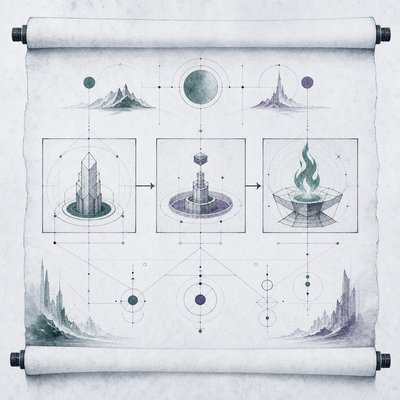 The Blueprint
 Timeline
Frequently Asked Questions
Where is the official Auroracoin source code?
In the project's public GitHub repository, linked above. Releases, build instructions and the commit history are all published there.
Does this site host any downloads?
No. Wallet binaries and other software should come only from the project's own channels, for the security reasons explained on the wallets page. The only asset served here is the airdrop infographic, which is free to embed.
Can the airdrop infographic be reused?
Yes, freely, with a link back to this site as the source. The embed snippet above copies straight into any HTML page or CMS editor.
How can old claims about Auroracoin be verified?
On the blockchain itself, through any explorer that indexes AUR. The premine burn, the block schedule and the supply are all public data that no archive or news report needs to be trusted for.